Overview:
The banking industry has changed dynamically in recent years, especially after the entrance of digitisation. People want faster, easier and better financial services. Traditional banks are still very important. New kinds of banks called neobanks have come into the picture. They offer a way of banking that’s mostly online and made for today’s customers. Even though both kinds of banks give services, they work in very different ways. Their ways of working, the technology they use, how they treat customers, and the products they offer can be quite different.
What Are Neo-Banks?
Neo-banks are banks that give their services mostly through mobile apps and websites. They usually do not have any branches. Customers can handle their accounts, payments and cards all online. In India, many neobanks do not have a banking licence. Instead, they work with banks that have a licence. These licensed banks handle the part of the work that needs to be regulated. The neobank takes care of the part and the customer experience. This way of working helps neo-banks use the banking systems and add modern technology. They use things like APIs, automation, intelligence and cloud computing.
What Are Traditional Banks?
Traditional banks have been around for a long time. They use traditional ways of working. They have branches, ATMs, online banking and mobile apps. They offer a range of financial services. These include savings accounts, current accounts, loans, mortgages, credit cards, investments and things like wealth management. They have been around long enough that customers can go to a branch and talk to someone. This can be very helpful for financial needs, big money moves and planning for the future.
Main Differences Between Neo-Banks and Traditional Banks:
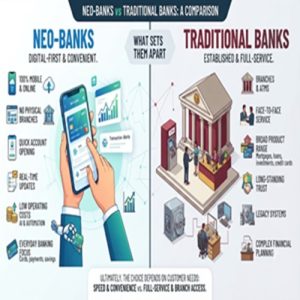
The main difference is how they do their work. Traditional banks started with branches and old ways. They now offer services too. Neo-banks started with tools and built everything around them.
Customer experience is another difference. Neo-banks focus on apps that’re easy to use. They make it quick to open an account. They give real-time updates on transactions. They let customers manage their cards, track their money and get help through the app. Traditional banks have tools now, but they still use older systems and old ways.
Costs and fees can be different. Neo-banks do not have branches. This means they spend less on buildings and staff. They can offer lower fees or better digital tools. Traditional banks have to pay for branches, ATMs and other physical stuff.
Products and services are another thing. Traditional banks offer kinds of financial products. Neo-banks usually focus on banking. They offer things like payments, cards, savings and some loans. The kinds of products they offer can be very different from one neo-bank to another.
Technology and Personalisation:
Technology is really important for neo-banks. They use tools like AI, automation, APIs and data analysis. These tools help them give financial advice, make budgeting easier and offer faster help. This makes banking easier and more personal. Traditional banks are also trying to use technology. Adding new tools to old systems can be harder than building from the start.
Security, Trust and Regulation:
Traditional banks have been around for a long time. They have customer relationships. They follow rules and have physical places. Neo-banks have to build trust through security, clear operations and good partners.
In India, the rules are especially important. Many neobanks use banks to handle the parts that need to be regulated. Customers should know which bank is behind the services they use.
Which Banking Model Is Better?
There is no answer. Neobanks can be good for people who like using their phones, want service and like personalised tools. Traditional banks can be better for people who need certain kinds of products, want to go to a branch or need more help.
In the end, neo-banks are not replacing banks. They are making the banking world more digital and more focused on customers. The future might have teamwork between old banks and new digital banks. This way, the trust and strength of banks can work with the speed and new ideas of neo-banks.