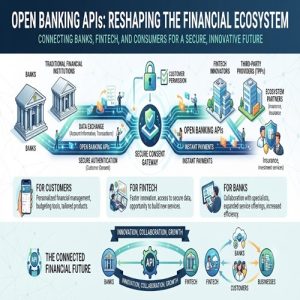
Introduction:
The financial services industry is getting more connected and digital. Open banking APIs are helping to make this happen. These Open Banking APIs allow banks and financial institutions to link their systems with companies that customers say are okay to look at their information. This means customers can share their information and make payments when they want to because they said it is okay. Open banking APIs are really important for this to work. This is creating opportunities for banks, fintech companies, businesses and consumers.
What are Open Banking APIs?
Open banking APIs are like doors that allow banks and other companies to talk to each other. With the customer’s permission, these APIs can let other companies access account information, get transaction data or make payments.
Modern open banking standards include rules for APIs that deal with account information and payments. These standards also cover security and other requirements. This makes it easier for different companies to work together and share information securely.
Apart from downloading bank statements of customers or entering their financial information into different apps, APIs can let other companies connect directly to the customers’ accounts. This makes things easier and more automated for the customer.
How are Open Banking APIs changing services?
One of the changes is that traditional financial institutions are working more with fintech companies. Banks do not have to create every service by themselves. They can work with companies that are really good at handling payments, budgeting and other financial services. For the customers, this is a good thing because they can get financial products that are tailored to their needs and are easy to use.
Apps can take information from accounts and put it together to give the customers a clearer picture of their finances. This helps the customers to keep track of how much money they are spending, make budgets and make good financial decisions. Open banking APIs can also make it easier for people to make payments. These APIs let other companies make payments for the customers, which gives the customers options to choose from.
Benefits for businesses and fintech companies:
Open banking APIs are giving businesses the opportunity to create their financial products without having to build a whole banking system from scratch. This is really helpful for businesses because they do not have to spend a lot of time and money on building something that already exists.
Open banking APIs are making it possible for businesses to focus on what they’re good at, which is creating financial products that are useful to the customers. The customers and businesses can both benefit from Open Banking APIs, which is why they are becoming so popular.
Open Banking APIs are designed for everyone involved, including the banks, the businesses and the customers, because they make financial services more accessible and easier to use. Fintech companies can use customer data to make services and give customers more targeted experiences.
For businesses, APIs can make financial processes easier, such as verifying accounts, collecting payments and managing cash flow. Businesses can also use customer data to make lending decisions.
The good thing is that this is increasing competition and innovation. By making it easier for financial institutions and technology companies to work together, API banking is encouraging services and business models.
Security and customer consent:
While Open banking APIs have a lot of benefits, security and data privacy are still very important. Customers should know how their financial data is being used and have control over it. Modern open banking rules focus on getting customer consent, secure authentication and controlled access to data.
Open banking rules emphasise customer consent. Secure access when other companies interact with account information or make payments. This makes security a fundamental part of banking rather than something that is added later.
Challenges of Open Banking APIs:
Even though Open banking APIs have a lot of potential, they can be hard to implement. Financial institutions may need to update their systems, establish common technical standards and make sure different platforms can work together. Companies also have to deal with requirements, security risks and data governance. Industry research has identified standardisation, coordination and technological infrastructure as challenges for sharing financial data through APIs.
The future of the financial ecosystem:
Open banking APIs are helping to transform services into interconnected digital ecosystems. As banks, fintech companies and other technology providers become more connected, customers can get personalised, integrated and convenient financial services.
This is also moving towards finance, where customers can share their data with other companies, such as investment and insurance companies. Ultimately, open banking APIs are more than a technology for connecting financial systems. They are becoming a foundation for collaboration, innovation and customer-centric financial services. Businesses that use application programming interface architecture and also think about security and making sure they follow the rules can do so in the financial world.
Open banking APIs are really changing how financial services work. They are making it easier for customers to share their information and make payments. Open banking APIs are also giving businesses and fintech companies opportunities to make financial products and services.
The main objective is to make sure that open banking APIs are secure and that customers have control over their data. This will help to increase trust and adoption of Open banking APIs.
In the end, open banking APIs are a part of the future of financial services. They are helping to create a connected and digital ecosystem that benefits customers, businesses and fintech companies.
Frequently Asked Questions:
- What is open banking?
Open banking is a financial services model that allows customers to securely share their financial data with authorised third-party providers through APIs, subject to consent and applicable regulations. It enables connected financial services, personalised products, and improved digital experiences.
- What are open banking APIs?
Open banking APIs (Application Programming Interfaces) are technologies that enable secure communication and data exchange between banks and authorised third-party applications. They allow services such as account aggregation, payment initiation, and financial data analysis.
- How are open banking APIs changing the financial ecosystem?
Open banking APIs are connecting banks, fintech companies, payment providers, and other financial service platforms. They support more personalised services, faster digital payment experiences, improved financial management, and innovation across the financial ecosystem.
- What are the key benefits of open banking APIs?
Key benefits include secure financial data sharing, easier account aggregation, personalised financial products, streamlined payments, improved customer experiences, and greater opportunities for fintech innovation.
- How do open banking APIs work?
Open banking APIs allow authorised applications to communicate with participating financial institutions through defined interfaces. With appropriate customer consent and authentication, an application can access permitted financial information or initiate supported payment transactions.
- Is open banking safe for customers?
Open banking can be secure when supported by strong authentication, encryption, access controls, consent management, and regulatory oversight. Customers should use authorised providers, review permissions carefully, and understand how their financial data will be used.
- What is the difference between open banking and traditional banking?
Traditional banking generally provides financial services through a bank’s own channels and systems. Open banking enables authorised third-party providers to connect with participating banks through APIs, allowing customers to access additional services and manage financial information across platforms.
- How do fintech companies benefit from open banking APIs?
Fintech companies can use open banking APIs to develop services such as budgeting applications, account aggregation tools, personalised lending solutions, and payment platforms. These integrations can reduce the need to build direct connections with every financial institution independently.
- What are the main challenges of implementing open banking APIs?
Common challenges include data privacy, cybersecurity threats, API standardisation, integration with legacy banking systems, regulatory compliance, and customer consent management. Financial institutions must address these issues to maintain trust and ensure reliable data exchange.
- What is the future of open banking APIs?
Open banking APIs may support broader financial connectivity, embedded finance, personalised financial services, and more integrated digital payments. In some markets, open banking is also expanding towards open finance, which can extend consent-based data sharing to additional financial products and services.