Introduction:
The increasing use of digital wallets has changed the method of making payments. Especially after the COVID-19 pandemic, the use of digital wallets has increased dynamically. Now, instead of carrying cash or multiple cards, people prefer to pay directly through smartphones, smartwatches, or other connected devices. Despite multiple benefits, one important question that remains unsolved is how safe digital wallets are.
Well, an answer to this question in simple words is that digital wallets are generally designed with advanced security technologies that make them highly secure. However, like any digital platform, they are also prone to risks, and therefore, it is important to use them wisely. Digital wallets such as Apple Pay, Google Pay, PayPal, Samsung Pay, and Venmo adopt all necessary steps to protect personal and financial data.
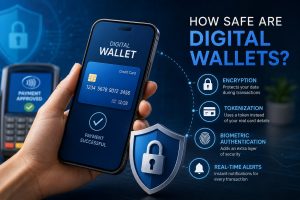
What Makes Digital Wallets Secure? One of the main reasons these wallets are considered safe is that they do not directly share your actual card details during transactions. They are enriched with technologies like encryption and tokenisation, which protect them from cyber attacks.
Encryption Protection: The process of encryption converts sensitive information into unreadable code during a transaction. This makes it difficult for hackers to easily access your payment details, even if they try to hack the data.
Tokenisation: Before initiating the payment, digital wallets create a temporary token or random number and use your real card number. This protects your confidential information from the eyes of people receiving the payment. Thus, your data is protected from theft.
Biometric Authentication: Most of these online payment platforms require authentication from you in the form of fingerprint scanning, facial recognition, or passcodes before approving a transaction. This acts as an extra layer of protection, making unauthorised access much harder.
Real-Time Notifications: It is one of the noticeable features of wallet apps. They send an instant alert whenever a payment is made. This allows users to quickly identify suspicious activity and respond immediately if something looks unusual.
Risks Associated With Digital Wallets:
Although digital wallets provide strong protection, a little mistake by the users can make them a target of cybercriminals.
Phone Theft or Loss: If the phone you use for making the payment online is lost or stolen, then it can be easier for the recipient to access the apps you are using. To avoid this scenario, it is recommended to use a strong password.
Phishing and Scams: Nowadays, the practice of sending fake emails, messages or links has become a common way to access somebody’s information. The surprising element of such messages is that their contents sound authentic. If any user provides them with the required information, then these people can easily access their details.
Using Public Wi-Fi: If you use a public Wi-Fi network for payment, then the chances of exposing your personal information to hackers are always at risk. Try to avoid the use of such Wi-Fi networks while using your mobile for payments.
Weak Passwords: Simple or reused passwords make it easier for hackers to gain access to your digital wallet accounts. The problem of weak passwords is one of the most common reasons for data breaches.
Tips For Using Digital Wallets Safely:
Although digital wallet providers do not leave any stone unturned towards the safety of your wallet, it is also necessary for users to adopt necessary measures to protect their accounts.
Use Strong Passwords: Always use strong passwords that have the combination of letters, numbers and special characters. Avoid using the same password for all accounts.
Enable Two-Factor Authentication: Enabling two-factor authentication makes it difficult for hackers to access your details easily.
Lock Your Device: Always secure your phone with a PIN, fingerprint, or facial recognition feature.
Avoid Public Wi-Fi: Use trusted internet connections when making payments or accessing financial apps.
Update the Payment Apps: Updating your payment apps regularly keeps them updated with the latest security measures.
Track Transactions Regularly: Check the transaction history regularly and report suspicious payments immediately.
Are Digital Wallets Safer Than Physical Wallets?
It would not be wrong to say that compared to physical wallets, digital wallets are safer. Physical cards can be stolen, copied, or lost easily. Digital wallets initiate every transaction after being authenticated by users and also hide actual card details from merchants, especially when making payments across borders. However, digital wallets also depend heavily on internet-connected devices, which introduces cybersecurity risks. If users fail to follow safe online practices, even advanced security systems may not fully protect them.
Conclusion:
Digital wallets are generally safe when used with full precautions. Features like encryption, tokenisation, biometric authentication, and instant alerts provide strong protection against fraud and theft. However, no technology is completely protected from cyber attacks.
Users should follow the process of making online payments with good cybersecurity habits, such as using strong passwords, enabling two-factor authentication, and avoiding clicking suspicious links or unsecured networks.