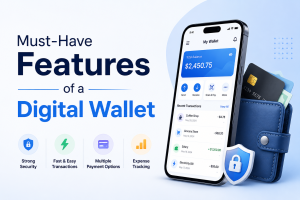
Origin of Digital Wallets:
The use of digital wallets for making online payments came into practice during the COVID-19 pandemic. It was the time when they were introduced to encourage contactless payments rather than to simplify the mode of payment. It was in the later years that these wallets emerged as the heart of digital financial services. Industry experts believe that the market for these wallets will grow further than ever throughout the world in the coming years.
Complete Package of Financial Management Tools:
Digital wallets used nowadays are not only used for making payments, but they embed in themselves lots of additional features which allow users to divide their expenses in multiple segments, track them on the basis of investments made on transportation, dining outside, investment on entertainment, etc. Apart from this, these wallets are now used as a source of managing the budget of users and informing them through alerts when their payment limit increases.
With the integration of performing all these activities, wallets are also now used for tracking savings, automating reminders for monthly payments, etc. All these features make them a robust financial tool. They are also used for collecting information about funds from multiple banks. In simple words, these wallets provide a complete picture of available funds and help in managing money more efficiently.
Loyalty and Rewards Points:
The offering of loyalty and reward points has played an important role in increasing the adoption of these wallets. They can automatically add reward points to users’ accounts, apply discounts and inform users about profitable offers like cashback schemes, coupon storage, and alerts according to the interests of users. All these functionalities not only increase the convenience of their use, but also inspires users for their continuous use.
Transaction History and Advanced Analytics:
A digital wallets executed properly empower the users with the facility to track the details of financial transactions and analyze investments under different heads. The users have the facility of filter their transactions according to date and the reason for which it was made. They can also get the prints of these transactions to maintain transparency. With the help of advanced analyzing feature, they can understand the method of investment and based from the available information.
Seamless Integration With Other Payment Options:
The success of a digital wallet mainly depends on its compatibility with other payment options. It should support the use of debit and credit cards, bank transfers, and technologies such as NFC and QR codes, ensuring widespread usability. Moving ahead, the integration of features like recurring payments, bill splitting, and transactions across borders further enhances their usability. Their ability of facilitate transactions even without an internet connection allows for smooth completion of financial transactions.
Strong Security Framework:
Security is of prime importance while developing these wallets. The advanced encryption feature protects sensitive financial data, and multi-factor authentication further enhances the layer of security. The use of biometric verification, such as fingerprint and facial recognition, ensures that only authorised is allowed to access the wallet. The use of tokenisation practice further enhances safety by replacing actual card details with secure codes. Nowadays, the entrance of artificial intelligence has made the detection of fraudulent activities easier and helps in controlling unauthorised transactions.
Peer-to-Peer (P2P) Transfers:
The feature of peer-to-peer has now become as their integral part. Users can send and receive funds within a span of seconds by validating their identity as phone numbers or email addresses. This smoothens day-to-day transactions, such as making bill payments, transferring funds to a friend, and making them an important part of our daily financial responsibilities.
Interoperability and Integration:
A properly created digital wallet can seamlessly integrate with other systems, including banking platforms, retail point-of-sale systems, and even public transport networks. This makes it easier for users to make payments through various devices for different services. The feature of automated payments and smart contracts further helps in performing transactions with human intervention.
User Experience and Design:
The experience of users has played an important role in increasing the popularity and use of a digital wallet. A clean, self-understanding interface with simple functions makes it easier for use by first-time and experienced users. The facility to customise the use, accessibility and well-managed layout enhances the user experience. Removing the levels of difficulty in using a wallet and focusing on making it easier to use can increase customer satisfaction.
Conclusion:
The use of digital wallets has emerged as a boon to perform financial transactions and manage funds in the simplest way. The integration of like convenience, security, and advanced functionality further enhances their adoption. From managing expenses and earning rewards to enabling secure payments and seamless transfers, they have eliminated the need to carry physical wallets. If you are looking to explore your financial activities and create an easy-to-use wallet for users, then joining the hands of an expert in fintech solutions will help in shaping your business.